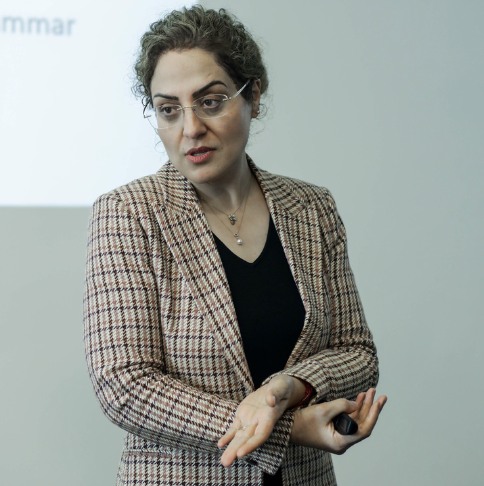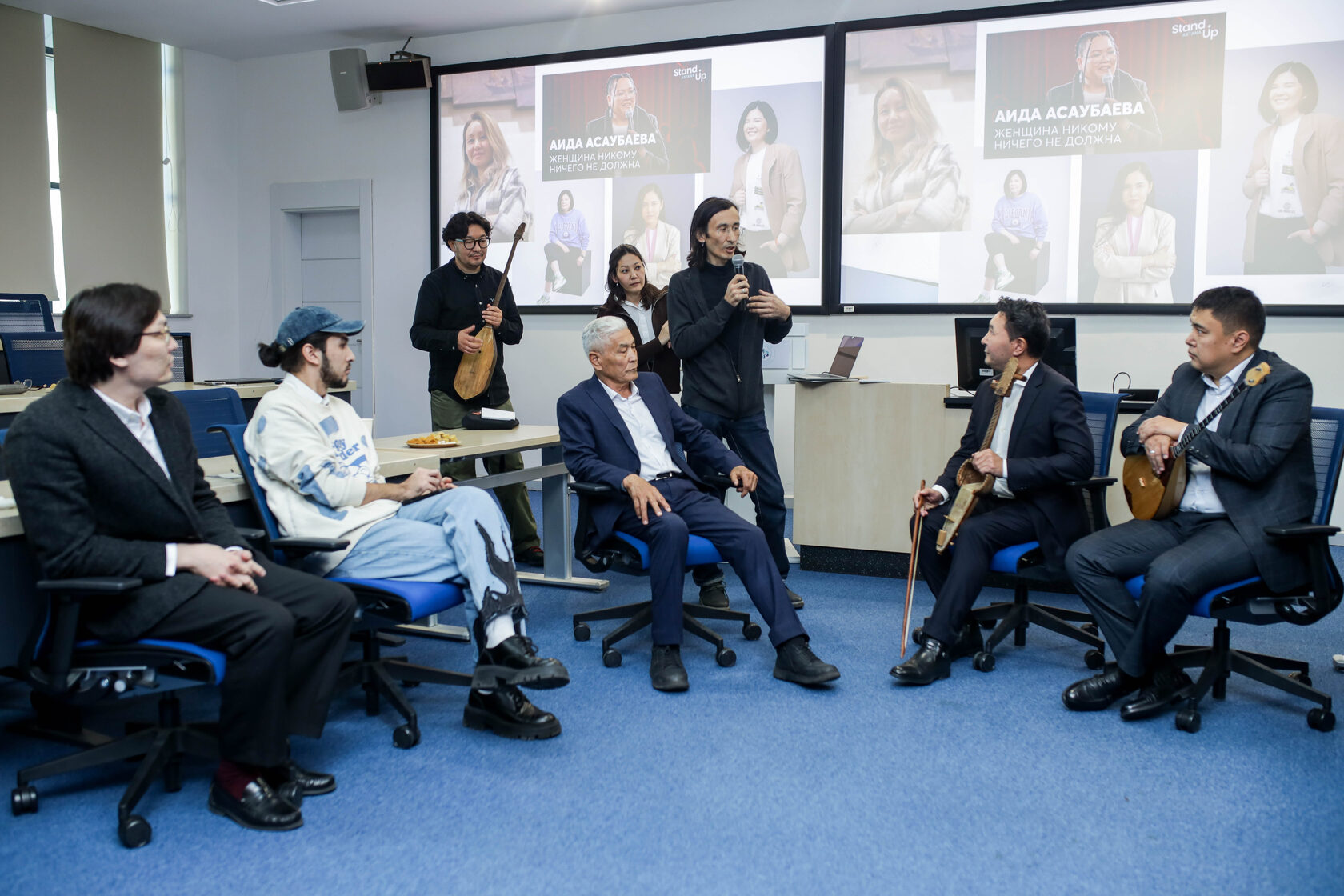
Voices at the margins: A transformative gathering of global scholars at Nazarbayev University
This November, Nazarbayev University in Astana became the heart of a global conversation as it welcomed around 100 scholars from around the world for the 16th Annual Gender, Work & Organization (GWO) Conference. Framed around the powerful theme “Voices at the Margins: Rethinking Gender, Labor, and Belonging,” the conference unfolded as a remarkable celebration of scholarship, solidarity, and the power of feminist, decolonial, and intersectional research.
Across three inspiring days, participants explored urgent and complex questions:
With sessions ranging from the invisibilized labor of women in refugee education, to ecological storytelling and extractivism, from queer and Indigenous epistemologies to decolonial archives and feminist activism in Central Asia, the conference offered both intellectual depth and emotional resonance. Each panel, workshop, and keynote added a unique strand to the vibrant fabric of critical inquiry and community building.
Hosted for the first time in Central Asia, the conference carved space for new geographies of feminist thought, offering an intentional platform for scholars from the Global South and post-socialist contexts to share, question, and reimagine. The presence of younger researchers, doctoral students, and early-career academics, many attending their first international conference, infused the event with a sense of hope, humility, and shared responsibility.
Beyond the formal sessions, conversations spilled into hallways, tea tables, bazaars, and dinner gatherings, each encounter deepening the spirit of collective care and scholarly kinship that defined the conference. The warmth of Kazakh hospitality, the rhythm of local music, and the scent of plov in the air reminded all that the politics of knowledge is never separate from the politics of place.
As the curtains draw on this powerful gathering, our deepest gratitude goes to the phenomenal organizing team, GSB NU, scholars, administrators, student volunteers, artists, chefs, and technicians, whose labor and love made every detail count. This was more than a conference. It was a shared act of resistance, remembrance, and renewal.
From Astana to the world, the echoes of these voices at the margins will continue to ripple. Until we gather again.
This November, Nazarbayev University in Astana became the heart of a global conversation as it welcomed around 100 scholars from around the world for the 16th Annual Gender, Work & Organization (GWO) Conference. Framed around the powerful theme “Voices at the Margins: Rethinking Gender, Labor, and Belonging,” the conference unfolded as a remarkable celebration of scholarship, solidarity, and the power of feminist, decolonial, and intersectional research.
Across three inspiring days, participants explored urgent and complex questions:
- Whose voices are heard in the academy and whose are silenced?
- What does it mean to center knowledge from the margins in times of political precarity, colonial legacies, and social upheaval?
- How do gendered forms of labor and survival intersect with displacement, ecology, and systems of power?
With sessions ranging from the invisibilized labor of women in refugee education, to ecological storytelling and extractivism, from queer and Indigenous epistemologies to decolonial archives and feminist activism in Central Asia, the conference offered both intellectual depth and emotional resonance. Each panel, workshop, and keynote added a unique strand to the vibrant fabric of critical inquiry and community building.
Hosted for the first time in Central Asia, the conference carved space for new geographies of feminist thought, offering an intentional platform for scholars from the Global South and post-socialist contexts to share, question, and reimagine. The presence of younger researchers, doctoral students, and early-career academics, many attending their first international conference, infused the event with a sense of hope, humility, and shared responsibility.
Beyond the formal sessions, conversations spilled into hallways, tea tables, bazaars, and dinner gatherings, each encounter deepening the spirit of collective care and scholarly kinship that defined the conference. The warmth of Kazakh hospitality, the rhythm of local music, and the scent of plov in the air reminded all that the politics of knowledge is never separate from the politics of place.
As the curtains draw on this powerful gathering, our deepest gratitude goes to the phenomenal organizing team, GSB NU, scholars, administrators, student volunteers, artists, chefs, and technicians, whose labor and love made every detail count. This was more than a conference. It was a shared act of resistance, remembrance, and renewal.
From Astana to the world, the echoes of these voices at the margins will continue to ripple. Until we gather again.
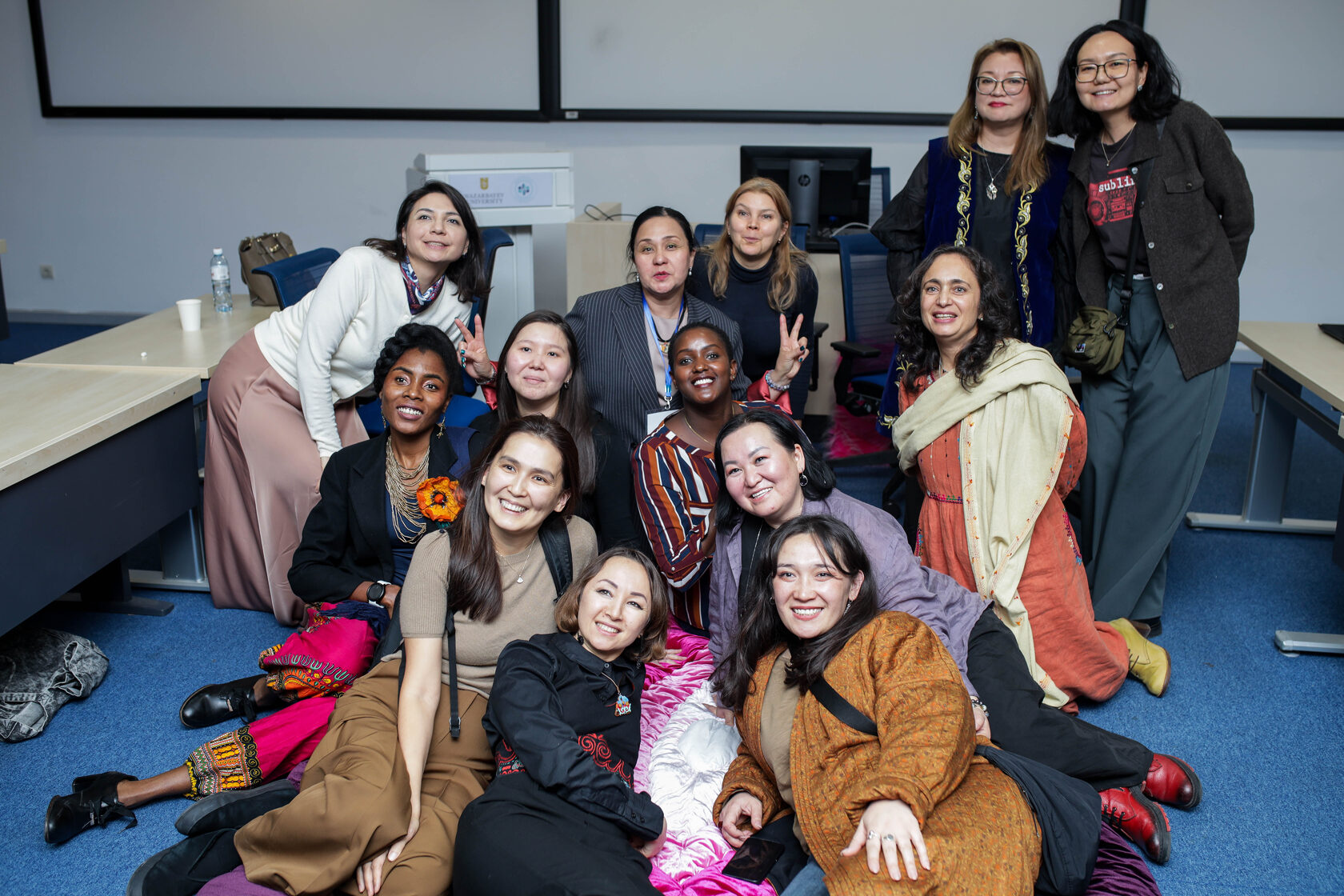
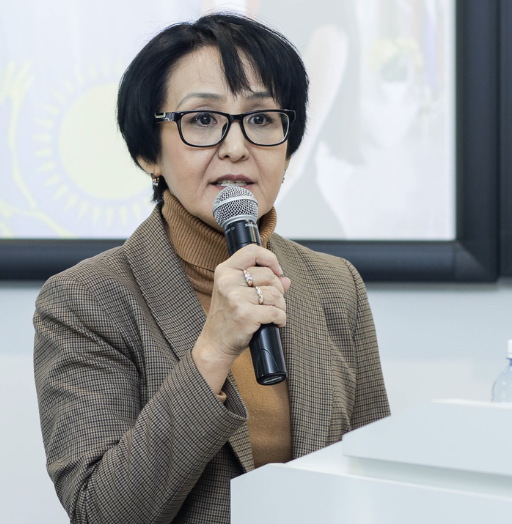
The weight of women’s voices: Notes from Ainash Mustoyapova’s keynote
“The Power and Limits of Women’s Voices: The Case of Kazakhstan,” delivered by Dr. Ainash Mustoyapova, became the quiet gravity pulling the entire event toward it.
Mustoyapova didn’t speak about women’s voices as something abstract or symbolic. She spoke about who is allowed to speak, who is amplified, and who disappears once power decides the conversation is over.
Tracing Kazakhstan’s path from early modernization through Soviet rule and into the digital present, she mapped a familiar contradiction. Women were celebrated as signs of progress, absorbed into ideology, and eventually declared “liberated” — often precisely when their political agency was removed. When the Soviet state dismantled women’s institutions in 1930, the official story claimed the problem had been solved. History, she reminded us, rarely agrees with official stories.
Today, women’s voices re-emerge online. Social media becomes a counter-space for testimony, protest, and collective memory. Hashtags like #MeToo and #НеМолчи (“Don’t Be Silent”) break the silence that the state never addressed. But power adapts. The glossy “Be Woman” forum, Mustoyapova argued, revealed how empowerment can be repackaged as spectacle — funded by elites, emptied of politics, and sold back to women as inspiration.
This is the throughline of Mustoyapova’s work: refusing easy endings. Her scholarship doesn’t offer comfort; it offers clarity. The keynote ended without an applause-driven closure, leaving instead a shared unease and a sharper question: what does it actually mean to listen, when listening itself is a political act?
In one of the most powerful keynotes of the conference, Dr. Galym Zhussipbek from Suleiman Demirel University offered a profound and necessary rethinking of Kazakh history, not as a backwards-looking lament, but as a forward-facing act of reclamation and philosophical renewal.
His keynote, titled “Resilience, Striving for Life, Identity, and Dignity,” set the intellectual tone for the conference by re-centering nomadic knowledge systems as valid, rich, and resilient forms of life that challenge the colonial underpinnings of Soviet modernity.
Dr. Zhussipbek reminded us that Kazakh nomadic culture — its oral traditions, fluid social systems, deep respect for land, and ethics of hospitality — was not a deviation from modernity but an alternative to it. He positioned Kazakh epistemology as a living archive of concepts such as mobility, decentralization, empathy, and dignity, each resisting the rigidities of authoritarian statecraft and extractive modernism.
“The Power and Limits of Women’s Voices: The Case of Kazakhstan,” delivered by Dr. Ainash Mustoyapova, became the quiet gravity pulling the entire event toward it.
Mustoyapova didn’t speak about women’s voices as something abstract or symbolic. She spoke about who is allowed to speak, who is amplified, and who disappears once power decides the conversation is over.
Tracing Kazakhstan’s path from early modernization through Soviet rule and into the digital present, she mapped a familiar contradiction. Women were celebrated as signs of progress, absorbed into ideology, and eventually declared “liberated” — often precisely when their political agency was removed. When the Soviet state dismantled women’s institutions in 1930, the official story claimed the problem had been solved. History, she reminded us, rarely agrees with official stories.
Today, women’s voices re-emerge online. Social media becomes a counter-space for testimony, protest, and collective memory. Hashtags like #MeToo and #НеМолчи (“Don’t Be Silent”) break the silence that the state never addressed. But power adapts. The glossy “Be Woman” forum, Mustoyapova argued, revealed how empowerment can be repackaged as spectacle — funded by elites, emptied of politics, and sold back to women as inspiration.
This is the throughline of Mustoyapova’s work: refusing easy endings. Her scholarship doesn’t offer comfort; it offers clarity. The keynote ended without an applause-driven closure, leaving instead a shared unease and a sharper question: what does it actually mean to listen, when listening itself is a political act?
In one of the most powerful keynotes of the conference, Dr. Galym Zhussipbek from Suleiman Demirel University offered a profound and necessary rethinking of Kazakh history, not as a backwards-looking lament, but as a forward-facing act of reclamation and philosophical renewal.
His keynote, titled “Resilience, Striving for Life, Identity, and Dignity,” set the intellectual tone for the conference by re-centering nomadic knowledge systems as valid, rich, and resilient forms of life that challenge the colonial underpinnings of Soviet modernity.
Dr. Zhussipbek reminded us that Kazakh nomadic culture — its oral traditions, fluid social systems, deep respect for land, and ethics of hospitality — was not a deviation from modernity but an alternative to it. He positioned Kazakh epistemology as a living archive of concepts such as mobility, decentralization, empathy, and dignity, each resisting the rigidities of authoritarian statecraft and extractive modernism.
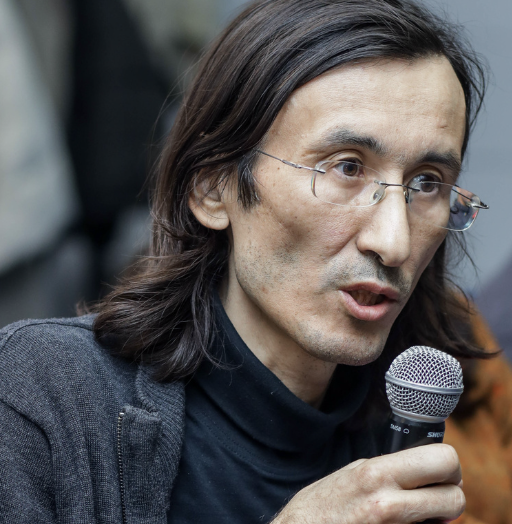
Keynote reflection: Resilience, striving for life, identity, and dignity
He traced the violent disruption of these traditions through Soviet famine, repression, and epistemic erasure, when half the population was lost and a million forced into exile. But the focus of his address was not loss; it was resistance and revival. Drawing on decolonial philosophy, he urged us to see nomadic thought not as static folklore, but as a vibrant framework for imagining pluralistic futures — futures where fluidity, multiplicity, and moral dignity are not vulnerabilities, but strengths.
As the room fell into a contemplative silence, it was clear this was more than a keynote. It was a call to remember, and to reimagine. One participant put it best:
“Galym’s words stitched together threads we had not known were loose.”
In a conference about voices at the margins, Dr. Zhussipbek showed that these voices have never been silent — they’ve only been waiting for a world ready to listen.
— Dr. Galym Zhussipbek
He traced the violent disruption of these traditions through Soviet famine, repression, and epistemic erasure, when half the population was lost and a million forced into exile. But the focus of his address was not loss; it was resistance and revival. Drawing on decolonial philosophy, he urged us to see nomadic thought not as static folklore, but as a vibrant framework for imagining pluralistic futures — futures where fluidity, multiplicity, and moral dignity are not vulnerabilities, but strengths.
As the room fell into a contemplative silence, it was clear this was more than a keynote. It was a call to remember, and to reimagine. One participant put it best:
“Galym’s words stitched together threads we had not known were loose.”
In a conference about voices at the margins, Dr. Zhussipbek showed that these voices have never been silent — they’ve only been waiting for a world ready to listen.
— Dr. Galym Zhussipbek
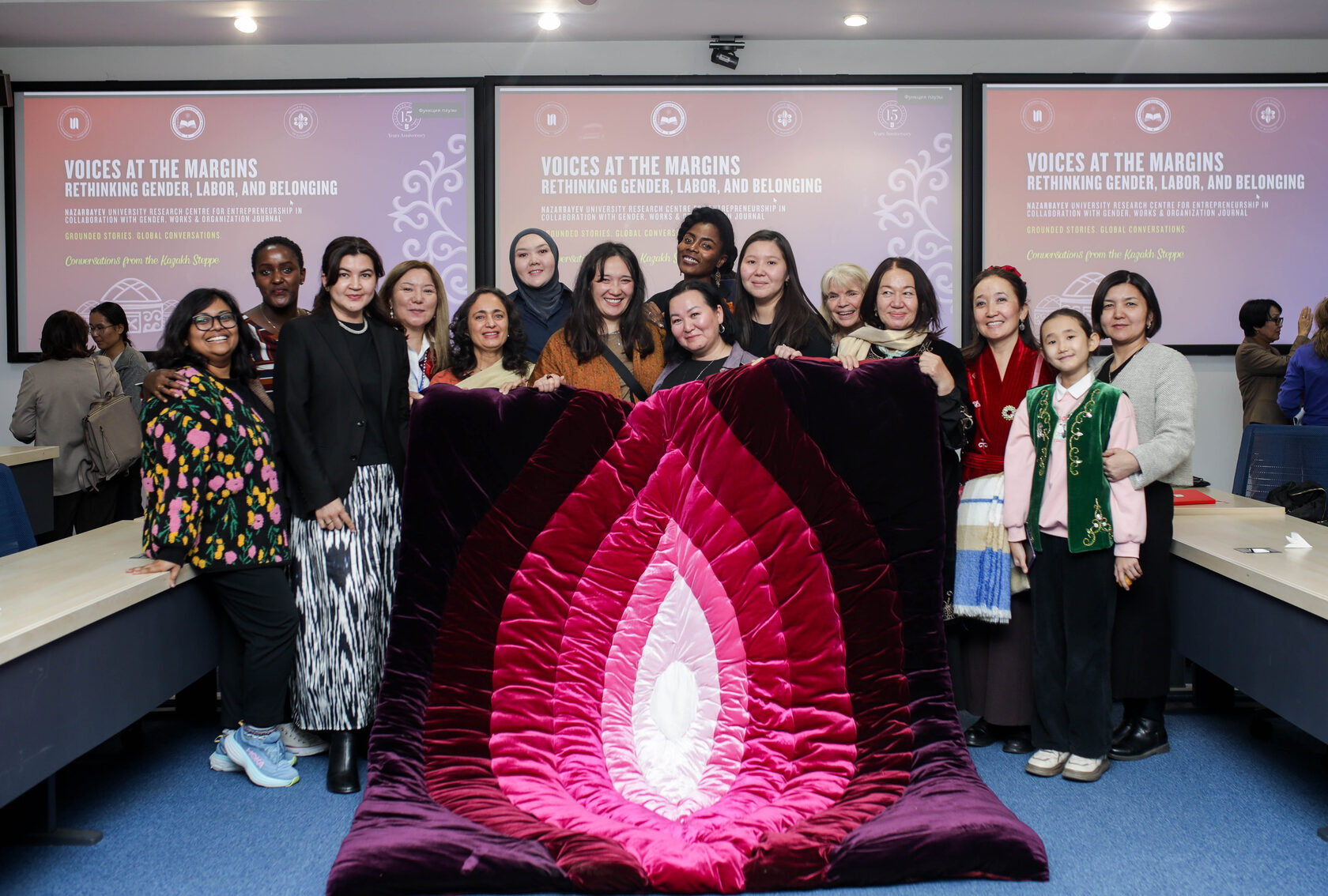
Where creativity meets academia: Why we brought artists to the heart of an academic conference
In designing this conference, we knew there were questions academia could not answer on its own. Decoloniality, memory, identity, and belonging — these are lived, felt, and embodied realities, not merely intellectual categories. This is why we created two dedicated sessions that brought together Kazakh musicians, storytellers, visual artists, filmmakers, journalists, and cultural practitioners.
Artists work with memory in ways that scholars sometimes cannot. Their mediums, such as sound, colour, movement, and craft, carry historical pain, resilience, and possibility without needing translation. By bringing artists into dialogue with academics, we invited a deeper epistemic conversation about how knowledge is made, transmitted, and reclaimed in Kazakhstan.
The Tañǵy Shai: Keepers of Memory and Tradition panel, facilitated with such care by Bella Qassymqyzy and Annas Bagdad, revealed how musical heritage and oral tradition function as living archives of Kazakh identity. Kyushi, instrument-makers, contemporary musicians, and cultural historians traced how küy, craft, and performance have preserved memory across generations — even when political regimes attempted to silence them.
Later, in Rooted Reclamations, guided by Dr. Galym Zhussipbek, artists and cultural practitioners explored womanhood, postcolonial memory, intergenerational storytelling, and the emotional archives embedded in music and ethnographic traditions. Their contributions reminded us that decolonization is not only a theoretical project but a creative one — rooted in the stories people tell, the melodies they inherit, and the art they make to reclaim what was taken.
These sessions showed that the work of reclaiming identity requires both rigorous analysis and creative imagination. They demonstrated why universities must engage directly with practitioners: because practice often sees what theory has not yet learned to name.
Our heartfelt thanks to Bella, Galym, and Annas for curating these conversations with such generosity and insight. They helped create a space where academia and artistry could meet as equals — each illuminating what the other could not see alone.
At the conference, one of the most compelling contributions came from Professor Bejji, Professor of Career Studies at the University of Southampton and Associate Editor of Human Relations (FT50, ABS 4*), one of the highest-ranked journals in global academia. Across two sessions, she combined personal reflection with practical guidance in a way that resonated across career stages.
In her first keynote, Professor Bejji reflected on her journey from the Global South into elite Western academic institutions. She spoke openly about questions of legitimacy and belonging, and about the often unspoken challenges of navigating academic spaces shaped by different histories and expectations. Rather than presenting a success story, she focused on the ongoing process of building an academic identity — one shaped by uncertainty, persistence, and careful decision-making.
In designing this conference, we knew there were questions academia could not answer on its own. Decoloniality, memory, identity, and belonging — these are lived, felt, and embodied realities, not merely intellectual categories. This is why we created two dedicated sessions that brought together Kazakh musicians, storytellers, visual artists, filmmakers, journalists, and cultural practitioners.
Artists work with memory in ways that scholars sometimes cannot. Their mediums, such as sound, colour, movement, and craft, carry historical pain, resilience, and possibility without needing translation. By bringing artists into dialogue with academics, we invited a deeper epistemic conversation about how knowledge is made, transmitted, and reclaimed in Kazakhstan.
The Tañǵy Shai: Keepers of Memory and Tradition panel, facilitated with such care by Bella Qassymqyzy and Annas Bagdad, revealed how musical heritage and oral tradition function as living archives of Kazakh identity. Kyushi, instrument-makers, contemporary musicians, and cultural historians traced how küy, craft, and performance have preserved memory across generations — even when political regimes attempted to silence them.
Later, in Rooted Reclamations, guided by Dr. Galym Zhussipbek, artists and cultural practitioners explored womanhood, postcolonial memory, intergenerational storytelling, and the emotional archives embedded in music and ethnographic traditions. Their contributions reminded us that decolonization is not only a theoretical project but a creative one — rooted in the stories people tell, the melodies they inherit, and the art they make to reclaim what was taken.
These sessions showed that the work of reclaiming identity requires both rigorous analysis and creative imagination. They demonstrated why universities must engage directly with practitioners: because practice often sees what theory has not yet learned to name.
Our heartfelt thanks to Bella, Galym, and Annas for curating these conversations with such generosity and insight. They helped create a space where academia and artistry could meet as equals — each illuminating what the other could not see alone.
At the conference, one of the most compelling contributions came from Professor Bejji, Professor of Career Studies at the University of Southampton and Associate Editor of Human Relations (FT50, ABS 4*), one of the highest-ranked journals in global academia. Across two sessions, she combined personal reflection with practical guidance in a way that resonated across career stages.
In her first keynote, Professor Bejji reflected on her journey from the Global South into elite Western academic institutions. She spoke openly about questions of legitimacy and belonging, and about the often unspoken challenges of navigating academic spaces shaped by different histories and expectations. Rather than presenting a success story, she focused on the ongoing process of building an academic identity — one shaped by uncertainty, persistence, and careful decision-making.
When a scholar becomes a mirror: Professor Mina Bejji’s transformative keynotes
In her second session, Professor Bejji shifted from narrative to analysis. Drawing on her research into the careers of highly accomplished scholars, including Nobel laureates, she outlined the habits and orientations that sustain world-class research over time. Her emphasis was not on metrics or shortcuts, but on intellectual discipline, curiosity, integrity, and the courage to pursue original questions.
Reflecting on the conference afterward, she wrote:
“Each session at Voices at the Margins spoke its theme…
I am going to need a lot of time to think and reflect on
this transformative experience made possible by
Nazarbayev University.”
Together, her sessions captured the core aim of the conference itself: to create space for reflection, rigor, and responsibility in how academic lives are imagined and lived.
In her second session, Professor Bejji shifted from narrative to analysis. Drawing on her research into the careers of highly accomplished scholars, including Nobel laureates, she outlined the habits and orientations that sustain world-class research over time. Her emphasis was not on metrics or shortcuts, but on intellectual discipline, curiosity, integrity, and the courage to pursue original questions.
Reflecting on the conference afterward, she wrote:
“Each session at Voices at the Margins spoke its theme…
I am going to need a lot of time to think and reflect on
this transformative experience made possible by
Nazarbayev University.”
Together, her sessions captured the core aim of the conference itself: to create space for reflection, rigor, and responsibility in how academic lives are imagined and lived.