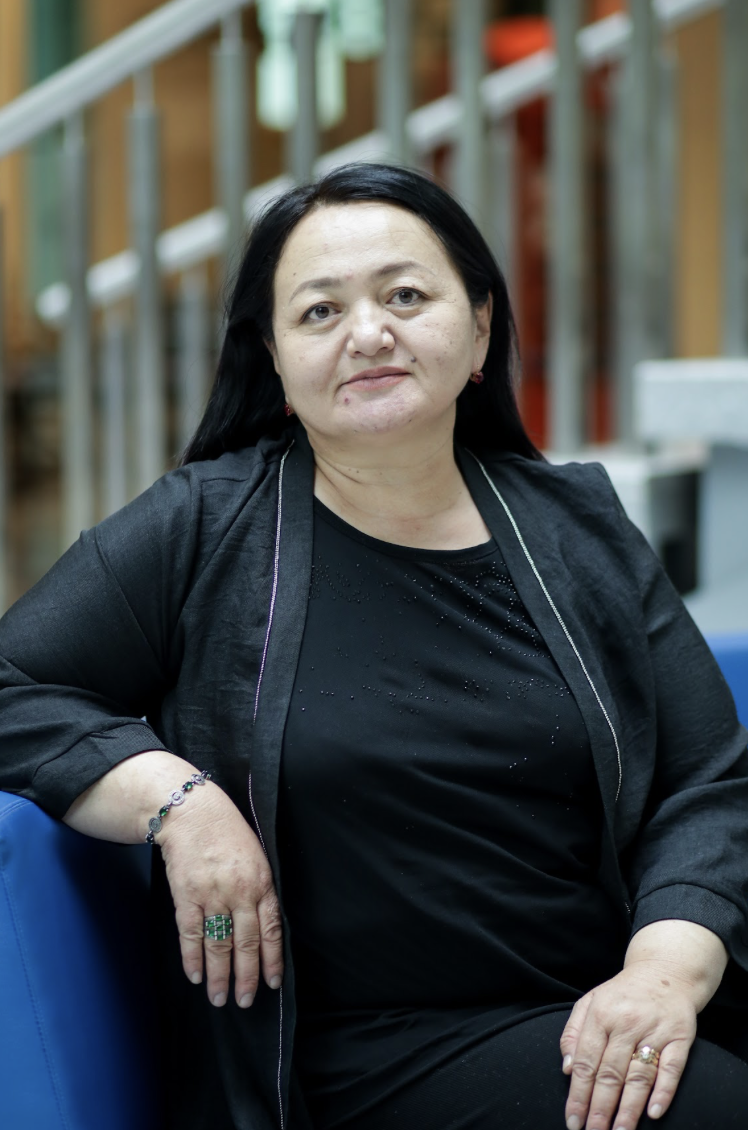
Bakytgul Adiyatkyzy’s narrative begins not with business ambition, but with the quiet rupture of a life-long career in education. “Due to my health, I had to undergo surgery on my leg. I had to leave the pedagogical field I’d been working in all my life.”
The profession that once gave her meaning, standing before students, tirelessly active from dawn to dusk, became inaccessible when walking itself grew difficult. After surgery, confined to a wheelchair for three months, she recalls: “Believe me, for someone who’s always been out in society, sitting at home all day is unbearable.”
But even in stillness, her will stirred. That stirring, what Abai would call qairat (will), was the first ember of her entrepreneurial journey. Refusing to remain idle, she cleared a room in her three-room apartment and opened a mini-pekarnya (home bakery).
“I told my husband, bring me two sacks of flour,” she laughs, “From one sack, I made 200 flatbreas), and from two — 400. We sold them all in two and a half days.”
What started as a modest home-based venture quickly evolved. When she moved to Astana, the business scaled from serving 10–12 local stores to supplying 50+ outlets. She rose at 3am to make deliveries by 8–9am, offering hot bread a detail she proudly describes as her business’s fishka (signature touch): “The secret was delivering them hot. People waking up early for breakfast loved it.”
But behind this growth was silent sacrifice. She and her daughter baked through the night while her husband handled delivery.
“It was adskii trud. No rest days.”
Eventually, her body rebelled. “Working with a hot oven all the time began to affect my throat. My health collapsed again. I had to stop.”
This moment, a convergence of exhaustion, physical breakdown, and introspection, marked psychological rupture. Bakytgul names it plainly: “I think I burned out because I didn’t understand how to run a business properly. I didn’t trust anyone with the recipe. I wanted to do everything myself.”
Her realization came only after attending the TalpynUp program, which she calls a turning point:
“I realized I was doing everything in the red zone. I was ignoring my health, ignoring my family.”
Like many Qazaqs shaped by the post-Soviet ethos of resilience-through-suffering, she had internalized the idea that worth comes only through toil. In this, Abai’s warning rings clear:
“Hold together your mind, will, and heart. Then, you will be whole — different from the rest.”
TalpynUp didn’t just teach business, it reoriented her aqyl (mind), realigned her jurek (heart), and recalibrated her qairat (will).
“After studying there, I understood so many mistakes I had made. Before that, I just kept doing, without tracking anything … no bookkeeping, no accounting. I didn’t even realize how harmful that was.”
The shift from reactive survival to proactive strategy had begun.
Yet her transformation wasn’t only technical. It was existential. “After I entered entrepreneurship, my whole way of thinking changed. When your environment changes, your mindset does too.” This moment of self-reclamation, reframing identity through enterprise, sits at the heart of her journey.
Still, structural barriers loomed. “I applied for government subsidies three times, every time I was rejected.” For Bakytgul, the lack of systemic support for people with disabilities in Qazaqstan is not just an inconvenience. It’s a source of deep sorrow.
“There’s not a single advantage for us. Thinking about that really hurts.”
And yet, she persisted, not from privilege, but from principle.
“We used what little money we had, ordered an oven from Shymkent, and started the bakery from our home. My family supported me financially and emotionally.”
Support from the state may have been absent, but solidarity emerged elsewhere. At TalpynUp, she found not only knowledge but kinship:
“I met so many women running businesses. For example, Mahabbat from Kostanay helped me a lot … with grants, taxes, accounting. I learned so much from her.”
Now, she is preparing for a new chapter: a meat business. “After we closed the bakery, my husband bought some horses with the money we had saved. Now he’s raising them, and we’re preparing to open a meat shop in Astana.”
But this time, she says, “I’ve learned to think differently. Now I plan to delegate, to rest, to spend time with my family. You can’t enjoy your business if it consumes you entirely.”
She has even found a new fishka (signature touch), a novel twist to differentiate herself in Qazaqstan’s competitive meat market.
“I’m confident I’ll succeed this time.”
In reflecting on what it means to be a successful entrepreneur, Bakytgul does not speak of revenue. She speaks of responsibility.
“I don’t say this just because I’m disabled, but we must bring benefit to society. When I see people in need, it hurts my heart. In the future, I want to do charity work.”
Bakytgul Adiyatkyzy embodies the spirit of Abai’s second word, the rejection of arrogance and the embrace of labour as the moral measure of a person. In the heat of her oven, she rediscovered humility, intellect, and compassion. By holding together mind, heart and will, she became, in Abai’s sense, Tolyq Adam, not flawless, but complete. Her wholeness was forged not in ease, but in the honest heat of work.
The profession that once gave her meaning, standing before students, tirelessly active from dawn to dusk, became inaccessible when walking itself grew difficult. After surgery, confined to a wheelchair for three months, she recalls: “Believe me, for someone who’s always been out in society, sitting at home all day is unbearable.”
But even in stillness, her will stirred. That stirring, what Abai would call qairat (will), was the first ember of her entrepreneurial journey. Refusing to remain idle, she cleared a room in her three-room apartment and opened a mini-pekarnya (home bakery).
“I told my husband, bring me two sacks of flour,” she laughs, “From one sack, I made 200 flatbreas), and from two — 400. We sold them all in two and a half days.”
What started as a modest home-based venture quickly evolved. When she moved to Astana, the business scaled from serving 10–12 local stores to supplying 50+ outlets. She rose at 3am to make deliveries by 8–9am, offering hot bread a detail she proudly describes as her business’s fishka (signature touch): “The secret was delivering them hot. People waking up early for breakfast loved it.”
But behind this growth was silent sacrifice. She and her daughter baked through the night while her husband handled delivery.
“It was adskii trud. No rest days.”
Eventually, her body rebelled. “Working with a hot oven all the time began to affect my throat. My health collapsed again. I had to stop.”
This moment, a convergence of exhaustion, physical breakdown, and introspection, marked psychological rupture. Bakytgul names it plainly: “I think I burned out because I didn’t understand how to run a business properly. I didn’t trust anyone with the recipe. I wanted to do everything myself.”
Her realization came only after attending the TalpynUp program, which she calls a turning point:
“I realized I was doing everything in the red zone. I was ignoring my health, ignoring my family.”
Like many Qazaqs shaped by the post-Soviet ethos of resilience-through-suffering, she had internalized the idea that worth comes only through toil. In this, Abai’s warning rings clear:
“Hold together your mind, will, and heart. Then, you will be whole — different from the rest.”
TalpynUp didn’t just teach business, it reoriented her aqyl (mind), realigned her jurek (heart), and recalibrated her qairat (will).
“After studying there, I understood so many mistakes I had made. Before that, I just kept doing, without tracking anything … no bookkeeping, no accounting. I didn’t even realize how harmful that was.”
The shift from reactive survival to proactive strategy had begun.
Yet her transformation wasn’t only technical. It was existential. “After I entered entrepreneurship, my whole way of thinking changed. When your environment changes, your mindset does too.” This moment of self-reclamation, reframing identity through enterprise, sits at the heart of her journey.
Still, structural barriers loomed. “I applied for government subsidies three times, every time I was rejected.” For Bakytgul, the lack of systemic support for people with disabilities in Qazaqstan is not just an inconvenience. It’s a source of deep sorrow.
“There’s not a single advantage for us. Thinking about that really hurts.”
And yet, she persisted, not from privilege, but from principle.
“We used what little money we had, ordered an oven from Shymkent, and started the bakery from our home. My family supported me financially and emotionally.”
Support from the state may have been absent, but solidarity emerged elsewhere. At TalpynUp, she found not only knowledge but kinship:
“I met so many women running businesses. For example, Mahabbat from Kostanay helped me a lot … with grants, taxes, accounting. I learned so much from her.”
Now, she is preparing for a new chapter: a meat business. “After we closed the bakery, my husband bought some horses with the money we had saved. Now he’s raising them, and we’re preparing to open a meat shop in Astana.”
But this time, she says, “I’ve learned to think differently. Now I plan to delegate, to rest, to spend time with my family. You can’t enjoy your business if it consumes you entirely.”
She has even found a new fishka (signature touch), a novel twist to differentiate herself in Qazaqstan’s competitive meat market.
“I’m confident I’ll succeed this time.”
In reflecting on what it means to be a successful entrepreneur, Bakytgul does not speak of revenue. She speaks of responsibility.
“I don’t say this just because I’m disabled, but we must bring benefit to society. When I see people in need, it hurts my heart. In the future, I want to do charity work.”
Bakytgul Adiyatkyzy embodies the spirit of Abai’s second word, the rejection of arrogance and the embrace of labour as the moral measure of a person. In the heat of her oven, she rediscovered humility, intellect, and compassion. By holding together mind, heart and will, she became, in Abai’s sense, Tolyq Adam, not flawless, but complete. Her wholeness was forged not in ease, but in the honest heat of work.