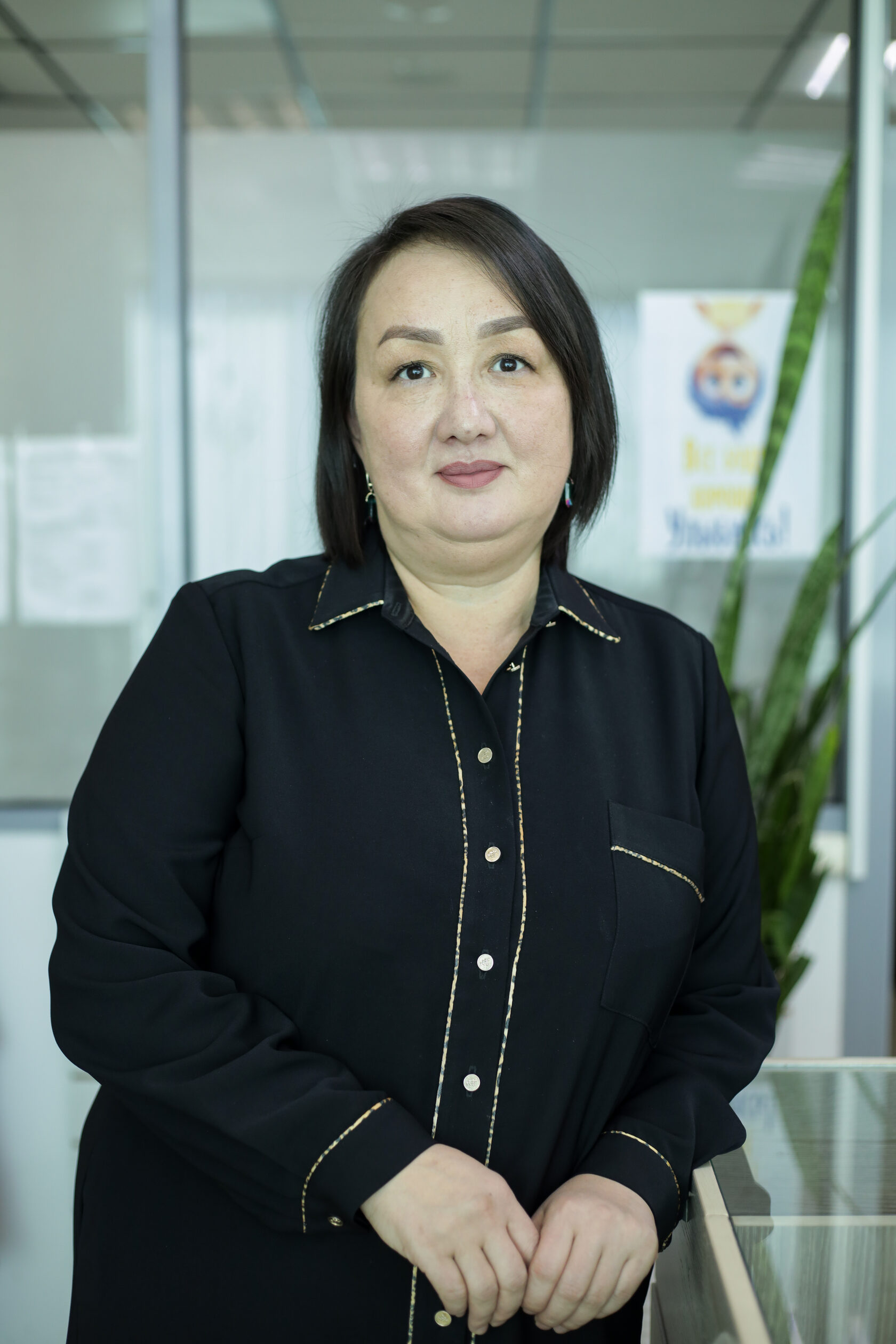
Abai warns that the mind can be destroyed by sloth, indifference, senseless amusement, or destructive passion. Aliya’s life has been a continual refusal of these harmful states. She could have retreated into despair when inspectors hid her in the archives to conceal her disability. She could have abandoned her dreams when a stroke stole her strength or when criminals threatened her business and children. She could have stayed home, unseen, when shame told her not to walk with a cane at a marathon. But she resisted every temptation to withdraw from life. She moved forward, sometimes slowly, sometimes with the help of strangers, always with dignity. Her life illustrates how Abai saw the path to becoming a Tolyq Adam, not through grand rhetoric but through small acts of steadfastness. Her story is the opposite of careless sloth or “senseless amusement.” She lives consciously, attentively, choosing joy as something earned, not given. Even her dreams, to open a logistics warehouse, to one day cook and teach in a working kitchen, to climb a summit that suits her step, reflect Abai’s belief in the need to keep one’s mind active and one’s talents alive. In Abai’s words we hear the philosophy; in Aliya’s life, we see it breathing.
Aliya Kanadilova likes to say she never set out to become an entrepreneur. “Things just came together on their own,” she often laughs. But behind that modest phrase lies a story shaped by hardship and held together by her sharp aqyl (mind), her generous jurek (heart), and qairat (will) that pulls her from bed each morning, reminding her that she is alive not just to survive, but to live. She was born in the Urals region, in a family where work was done with hands and patience. Her mother, originally from the Donetsk region, wove carpets from childhood. The click of the loom, the precision of each thread, the beauty that emerged from care, all of this seeped into Aliya without anyone needing to teach her. As a girl she loved textiles, beads, tapestries. Craft was a language in her home, and she learned to speak it early. By her twenties she was building a very different kind of life. She worked for a foreign company, traveling often on business trips, proud of her independence. “My hands worked, my head worked, so everything was good,” she remembers. Ambition stretched out ahead of her like an open road
Then at twenty-five, on the way back from a worksite, that road shattered. The accident fractured her spine in two places. Bone fragments entered the thoracic area and caused additional damage. “At first my legs gave out, and then my hands,” she says. For a long time she was bedridden, a body in rebellion against the fire inside her that refused to go out. She was not married yet. Her parents, ordinary, hardworking people, became her lifeline. “They even sold a cow to help me,” she says quietly. With their support and long hospital months, she began a slow return to movement: thousands of exercises, trying to hold a cup, trying to sit independently, trying to stand. A wheelchair followed. Crutches later. Even now, she says, “Every day for me is a fight. If I relax even once, it gets worse.”
There were other wounds too, social ones. After the accident she was assigned the first disability group, and at that time in Qazaqstan, someone with that status “was not allowed to work.” Inspectors arrived at the office and colleagues hid her in the archives. She remembers people saying, “If they find out you’re working, you’ll have to return your pension.” She learned silence. She learned how to disappear before anyone forced her to. Shame, not hers, wrapped around the label “invalid.” For many years she hid her disability status, avoiding questions and pity.
But the foreign company did something rare: they refused to discard her. Instead, they brought the world to her. They built her a home office: “They told me, ‘Your hands work, your head works, so you can work.’” They hired caregivers, sent couriers, installed special equipment. When she returned to the office with a cane, they moved to a wheelchair-accessible floor and made sure she could enter the workplace with dignity. Through their actions, they reminded her: she remained a full human being. Entrepreneurship arrived quietly, woven into her love for craft. She began ordering Swarovski crystals and Japanese seed beads since no one sold them in Qazaqstan. But suppliers sold only in bulk. Other women asked, “Can I buy some from you?” It began like that, no strategy, just need. She and a friend, both young mothers on maternity leave, rented a tiny space, unpacked shipments next to strollers, and taught simple master classes. “When I started, I didn’t have a big goal. And in two or three months, a shop appeared.” They named it Solnyshko.kz, little sun.
When her friend moved away and Aliya became pregnant with twins, she considered closing. But her mother and husband told her not to. She managed the orders online, others handled sales in person. The shop survived currency swings, competition, and even a shift to Astana, where the family moved twelve years ago so she could access better medical care. Solnyshko.kz kept going. “Even when others were closing,” she says, “ours didn’t stop.” Life gave more battles. Eight years after the accident, when she could walk with crutches, she married the man who still stands beside her. Doctors insisted pregnancy was too dangerous. She and her husband spent six months fighting for permission, finding a young gynecologist who supported them. With that help came her first daughter, then a son, then twin girls. She also carries the memory of a lost fifth child. “Whatever anyone says, having many children is a huge joy,” she says, eyes softening. “Maybe the children are what push me to live actively.”
In 2018, when the twins were small, she suffered a stroke. It left her left side weak. She walks now with a cane on the right; leaning on it for ten years caused a bone spur. Her left heel remains fragile. Climbing stairs can feel like scaling a cliff. But she drives. She escorts her children everywhere. She works between school pickups and meals. “Physically it’s hard,” she says. “But in my head I live a full life.” Sport called her back, too. Before the accident, she ran marathons. Shame silenced that part of her for years. Then six years ago she showed up at a marathon with a cane. She waited for most runners to pass, then walked, slowly but determined, across the finish line. “That’s when I realized I will not forbid myself the things I love, no matter what others think.” Today she proudly does Nordic walking in marathons, moving at her own pace, toward her own finish. But entrepreneurship holds its own trials. Two years ago she faced something she still struggles to speak about: “an organized group” tried to seize her shop. Threatening messages. Photos of her children in their courtyard. Police inspections that mysteriously appeared. “From April to September it was hell.” A Chechen lawyer helped them fight back. The shop survived. But the fear took a toll. Still, she says, “If you can carry yourself through it, the rest can be resolved.” Her shop became more than business. It became a place of learning, especially for girls from a school for the hearingimpaired. “They follow the pattern with their eyes. They embroider silently.” Solnyshko.kz helps them find work with designers who value fine embroidery. “We try to give them a fishing rod,” she says, “not just a fish.” She believes craft is heritage. “Our ancestors were artisans. One day Qazaq craft will be recognized as art, like in Europe.” She organizes competitions, celebrates quality, encourages pride.
Motherhood threads through everything. Her weekly schedule is a map of four children’s lives, school, lessons, therapy, responsibilities. “Otherwise, you can’t keep it all in your head,” she laughs. She teaches her older children to drive, believing independence is learned early. She loves them fiercely and, yes, scolds them when needed. “Part of success I already have … many children,” she smiles. “What remains is to open those personal dreams.” And there are dreams, a cleaning and cooking “clinic” where she could teach homemaking as a craft; a small logistics business since goods fill every corner of the apartment; maybe even her own restaurant kitchen, where she could feel the heartbeat of food being made. And always, somewhere inside, she imagines a summit, maybe not Everest anymore, but still a peak that demands courage. She knows the barriers: missing railings, steep ramps, heavy doors, elevators that don’t work. She has endured strangers shouting when she parks in a disabled spot, blocking her car. “It still hurts,” she says. “If someone spits at you, you can’t pretend it didn’t happen.” But with age … or maybe experience … came another truth: “I used to be embarrassed. Now I stand up for my rights.” She does not want to use disability to evoke pity. For twenty years she hid it. Two years ago, she finally spoke openly. “It felt like I was naked.” But she no longer hides. She speaks now for women who write to her saying they lost hope … until they saw her living, working, laughing.
She measures success not in revenue but in fullness: “I have a shop, a car, a husband, a family. And I manage a lot despite illness.” She smiles when women say, “I want to be like you.” She responds, “Don’t divide people into categories. It all comes down to desire and planning.” She believes being useful saved her. When she was in a wheelchair, she visited hospitals to support injured children. On Instagram she replies to messages telling her she gave someone strength to try again. “Maybe that’s what helped me get out of the chair,” she wonders aloud. Aliya does not claim to be extraordinary. “I’m just the way I am,” she says. But the truth shines through her humility: she is crafting a life that is entirely her own, bead by bead, step by careful step, and inviting others to believe that they can do the same.