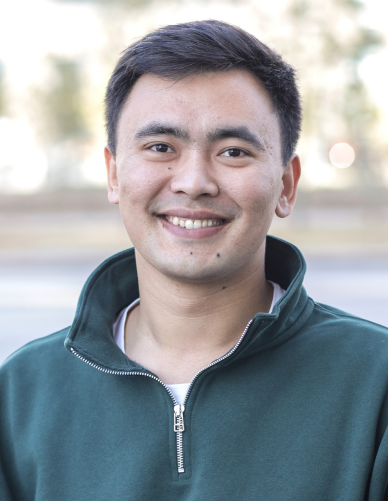
He was nineteen when life split into a before and an after. A summer accident in 2019 left Yerzhan Seytkazy with a spinal injury; within months, his father passed away. Grief arrived with bills and responsibilities. “I had no choice,” he says. “After the injury, only my mother and I were left, and we had debts. I needed money for rehabilitation.” The loss might have numbed him; instead, it clarified him.
“I didn’t want to admit that life ended there.”
Raised in Almaty, he had finished college as a translator and briefly enrolled at university, trying tourism while already working as a hotel administrator. Practical experience seemed to matter more than coursework, but the accident halted everything just as he was questioning his path. Only recently, “toward the end of 2024,” he notes, did he discover what he truly wants to study: business management. First, though, he had to steady the family and himself.
The injury became a hard teacher in a society where disability is often read as deficit. “Many able-bodied people didn’t initially perceive me as a fully capable, serious person,” he recalls. Pity arrived before respect. He answered by insisting on his own agency. When colleagues assumed winter travel for supplies was impossible, he refused to shrink: “People thought I couldn’t travel in winter to pick up supplies. I said, ‘If it needs doing, I’ll go.’” That quiet posture, neither loud defiance nor passive acceptance, began to shape everything that followed.
To pay for rehabilitation and keep his mind engaged, he started with whatever would earn: “I tried all sorts of things… women’s clothing, household goods.” Trading turned into momentum. Within two years he launched a small marketing agency; in 2022 he moved to Astana and became a team leader at an officially registered rehabilitation center. He manages operations, “everything except finances,” from patient intake and room assignments to staffing, logistics, and funding applications. Clients arrive from across Qazaqstan and the wider CIS for spinal cord injury, stroke, CP, and neurorehabilitation. His mornings are sacred: “I wake up at six in the morning… until noon I work at home without distractions, then head to the center.” On heavy days the inbox swells, “on average per day, we receive 15–50 messages, sometimes 100–150,” and
he sits with each one: “I talk to each person, consult, register, accompany.”
he sits with each one: “I talk to each person, consult, register, accompany.”
He laughs at the paradox of his temperament, drawn to communication and tired by it in the same breath, but the ethic underneath never wavers. “I treat every message as a call for help.” People write to a person who understands
Barriers persist, named without bitterness. Assignments are quietly downgraded, travel presumed impossible: “No need, better stay put, you’ll get tired.” He responds by being visible, competent, mobile, present. He even tested his independence against his own doubts: “I flew to New York alone…to prove something to myself. And this summer I traveled to London and Ireland.” Trust followed action; responsibility followed trust. The harder obstacles are concrete. “In Astana it’s better, especially on the left bank. But in Almaty you can’t get from point A to point B in a wheelchair.” Ramps and railings miss standards, tiles slip, slopes break momentum; in Pavlodar and Aktobe, “even worse.” He uses taxis; many cannot, transferring from chair to car requires strength and at least two helpers. Bureaucracy adds its own frictions. Reregistering of the LLP stalled because the new address belonged to the founder’s apartment. “I have to keep going back.”
Some inequities cut deeper because they pretend to be math. To secure annual rehabilitation quotas for patients, he pursued a medical license, furniture, certified equipment, inspections, “enormous effort” for a single paper. The insurance tariff stunned him: 9,600 tenge per person per day, the same as brief venereology procedures. “After trauma, rehab is an essential part of life.” Two hours of complex, hands-on therapy cannot be priced like a ten-minute injection. He has begun raising the issue through party channels: “Minimally, it’s unfair.”
Ambition without order burns out; he learned that the hard way. “There was some chaos.” In 2023 he rebuilt his days, mornings for deep work, afternoons on site, evenings for rest and medical care. Psychotherapy became a standing commitment: “I’ve been in psychotherapy for three years, twice a week. Entering the room, I deal with stress, grievances, boundary violations.” Medical treatments, once postponed, are now scheduled “like any business meeting.” The re-patterned week delivered what motivation slogans never do: calm. “I’ve become more organized, disciplined, and productive.” His equanimity is not new; it is cultivated. “I’ve always been calm…childhood, school, teaching English. Whatever happens around me, the most important thing is that I’m fine and well-fed… If I’m okay, we’ll figure out the rest.” It reads flippant; it isn’t. It’s a stance: keep the inner core steady so the outer work can proceed.
Independence did not calcify into pride. Twice he had to initiate fundraising for his own rehab. “It helped me work on my pride… When you must ask for help, stepping over pride, everything inside changes, and you start loving and thanking people.” He prefers reciprocity over transaction: “I can provide free consultations. Today I help you; tomorrow you help me. If you don’t, someone else will.” Mutual aid without a ledger becomes the culture of his work.
If he had one lesson for wouldbe founders, it would be simple. “Communication is the most important tool in life. Money, relationships, opportunities … all come through communication.” Begin with services that need minimal capital, home staffing, visa support, digital marketing. Starting is the hardest part. “Once you start, it’s no longer scary.”
Today he manages the center independently with a financial director while the founder lives abroad. He coordinates Qazaqstan’s branch of the international community for social entrepreneurs, partners with the Association for Inclusive Environments, and lectures on Ethics in communicating with people with disabilities. He helps run a news portal for social enterprise and is developing experience-exchange programs in Istanbul and London so local founders can “see how they work there and apply something here.” His ambitions are precise: grow the agency commercially without branding it a social enterprise; open a second rehabilitation branch abroad by 2026; gather more readers because “results always inspire.” Politically, he advocates for accessible infrastructure nationwide and free university education for people with disabilities, recognizing the hidden costs, medications, catheters, diapers, flights for rehab, that make tuition an impossible extra. “People with disabilities should live independently without accompanying persons.”
He doesn’t preach philosophy; he enacts it. He keeps his aqyl (mind) clear — operations tight, problems scoped, days structured. He keeps his jurek (heart) open — “I treat every message as a call for help,” free consultations, a bias toward listening: “We always want to be heard…
While you’re talking, you realize where your problem lies.” And he keeps his qairat (will) steady — winter errands in a wheelchair, a solo flight to New York, London and Ireland the relentless choosing of action over self-pity. In a culture where sorrow can harden into cynicism and success can slide into self-interest, he chooses a different arc: sorrow acknowledged, will awakened, work aligned with conscience. He refuses preferential treatment yet asks for fairness; he insists on standards without contempt. He is not waiting for a perfect system to act; he is acting to make the system better.
From Yerzhan we learn that dignity is built, daily. Not once, not in spectacle, but in repeated choices: answer the 6 a.m. messages; restructure the week; go where people say you cannot; ask for help when you must; let go when it’s time. Communication can be capital, order can be compassion’s ally, and service is the surest antidote to bitterness. Most of all, wholeness is not the absence of limitation but the integration of mind, heart, and will, a moral harmony that turns private sorrow into public good. He is building that harmony in the open, so others can follow the sound.