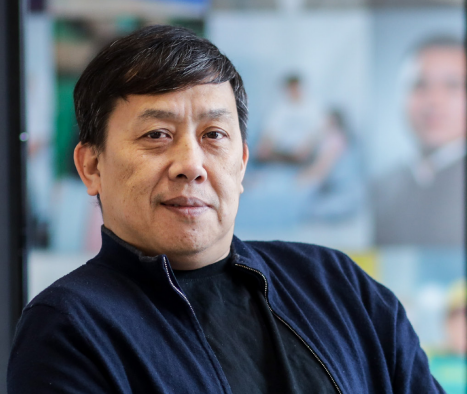
His entrepreneurial path also mirrors Abai’s teaching. Yerlan learned to analyse, reason, compare, try, fail, adjust, a living example of the “attractive force of the like,” constantly testing ideas until they matched reality. Even when denied grants, refused bank loans, or overwhelmed by financial mistakes, he never blamed fate. Instead, he studied, asked questions, refined his skills, and continued to grow. He understood, in Abai’s words, that spiritual and practical knowledge must be cultivated with vigilance or they wither.
Above all, his heart remained clear. He did not allow frustration, bitterness, or conceit to cloud the “mirror of the soul.” His center was created not for personal gain but to help those who had nowhere else to go — a reflection of the sensibility of the heart that Abai sees as essential to true humanity. Yerlan’s life unites mind, heart and will exactly as Abai envisions, showing how reason and willpower can elevate a person beyond hardship, restoring dignity and purpose through steady, honest work.
Yerlan Adilbekov was born in the quiet town of Charsk, in East Qazaqstan, where the rhythm of life followed the movement of trains and seasons. His childhood was simple, close to the land, surrounded by people who worked with their hands and believed in quiet strength. After finishing school, he carried with him not dreams of university, but a locomotive engineering certificate, an old Soviet-era system that prepared young boys for work instead of higher study. At nineteen, he was already on the railway, an assistant driver responsible for the long, heavy freight trains that crossed the Qazaq steppe. “We mostly carried cargo,” he recalled. “Passenger trains only from time to time.” He was young, strong, and full of the confidence that comes from knowing exactly what your hands can do.
Life changed the day after he turned twenty-one. It was summer, the kind of heat that makes rivers look inviting. He ran, took three quick steps, and dove headfirst into the water. “I misjudged it,” he said simply. The place he leapt into was shallow, although just a little further the river ran deep. The mistake was only a matter of seconds, but it fractured his cervical spine and damaged ninety percent of his spinal cord. Everything that had defined him, movement, work, strength, disappeared in an instant.
For six years after the injury, Yerlan remained confined to his home. He couldn’t sit, couldn’t travel, couldn’t do anything beyond the walls of his room. Yet even in this stillness, something inside him refused to give up. He began creating his own training equipment from what he had: ropes, rails, pulleys attached to his bed. “I made my bed into a real exercise machine,” he said. Every day, seven days a week, he trained, pulling, stretching, trying again and again. Slowly, the body that had betrayed him began responding. He learned to sit. He learned to dress himself. Independence, once taken for granted, became a victory of sheer, stubborn will.
When he was finally strong enough to sit, a woman from a local organization visited his home as part of a disability support program. Yerlan asked her, almost shyly, “Could you help me get into some kind of university?” She told him she would try. Two months later, she kept her promise. She found a distance-learning program at the Qazaq University of Technology and Business in Astana. Classes took place via Skype, a novelty at the time. Yerlan joined a group of seven to eleven students studying programming from their homes. It was the first time since his injury that his mind had space to grow again.
When he reached his final year, Yerlan decided to move to Astana. “To conquer the capital,” he said with a smile. He looked for work but found none at first. Then came an interview at JSC “NIT” an early e-government service company. They hired him as an E-GOV consultant, helping people obtain electronic digital signatures. The company prepared the office so he could work comfortably, removing unnecessary partitions and adjusting his workstation. It was meaningful work, helping others navigate systems that were new to everyone. For almost three years he was part of something bigger than himself, part of a country learning to move from paper to digital life.
But surgeries interrupted everything, ten of them over two years. “After the surgeries, I wasn’t allowed to sit long,” he recalled. He had to resign. Once again, he found himself pushed back into a space of stillness. But this time, he had knowledge. He had experience. He had will.
He registered as an individual entrepreneur and began participating in government tenders. He taught himself how to navigate tender platforms by reading, researching, and asking questions. “Gradually, I mastered it,” he said. The income was modest but enough to give him confidence. He earned independently. He paid his own way. He reclaimed dignity. Around that time, he tried to attend a new rehabilitation center in Astana, but they accepted only “early stage” patients. When he was denied, something shifted inside him. He remembered seeing stroke patients in hospitals and thinking that with the right system and consistent exercises, their bodies could be restored. “If done regularly for at least a month, a person can recover,” he often thought. He knew this because he had lived it in his own body. That was the moment the seed of an idea was planted:
If others were excluded from rehabilitation, why couldn’t he open a center for people like himself? For years, he nurtured the idea, writing notes in his phone whenever inspiration struck, what rooms were needed, what equipment, how the environment should feel. The notes accumulated until they resembled a complete business plan. He applied for grants, wrote letters to institutions, even to the president’s office. The answers were always the same: “Well done, keep working.” No money. No support
Eventually, Yerlan decided he could not wait for permission. He found a building, negotiated rent, and announced the opening on WhatsApp and through group messages. Within five minutes, his phone began ringing continuously. “I answered calls for three hours straight,” he said. Eight people made advance payments. With that money, he and his team bought beds, exercise machines, mattresses, everything needed for the first patients. Even the landlord supported him, giving him a month and a half grace period. It was a miracle made from willpower.
But the building had no accessible entrance, and all the rooms were on the second floor. He was dropped once while being carried up the stairs. “It became clear it couldn’t continue,” he said quietly. He closed the center and fell ill from exhaustion. For nearly a year, he worked on recovering his health and strength. On June 8 the following year, he opened a second center, this time slowly, room by room, with the money from each new patient. He lived in one of the empty rooms and turned another into an exercise hall. Gradually, the center grew to fourteen rooms, with physiotherapy instructors, massage therapists, a doctor, nurses on three shifts, orderlies, and cooks. For six years it has continued operating, taking in about twenty people at a time, with plans to expand to forty.
The uniqueness of Yerlan’s center lies in its structure. For many wheelchair users, daily travel to rehabilitation is nearly impossible. “People who haven’t experienced it simply don’t understand,” he explained. Helping someone transfer to a wheelchair, loading the wheelchair into a car, carrying it back out, it can take enormous physical effort, often too much for families without strong men. Yerlan’s center removes this burden entirely. Patients come once, stay in comfortable accommodation, receive meals, assistance, 24/7 care, and consistent therapy. It is full rehabilitation, not fragmented appointments.
His life as a business owner has not been smooth. Financial literacy was a major challenge. “It turns out finances are not as simple as it seems,” he admitted. He had to learn discipline, separating personal money from business money, enduring cash gaps, facing angry clients when refund delays happened. He survived landlords threatening to cut water and close the center. He learned to increase advertising, manage cash flow, and adjust prices to keep the center alive.
But there is also joy. Yerlan says the best part of entrepreneurship is the beginning, “from scratch, creating something new.” He loves the process of imagining, building, negotiating, organizing. Once the system runs, he becomes less interested. He is a man of movement, even if his body cannot move. His emotional world is shaped by the resilience he developed over years. He experienced burnout, “a state where you want everything to progress but it seems to stand still.” To heal, he closed the center for months, rested, watched TV, visited the village, breathed fresh air. When he felt ready, ideas returned, bringing his heart back to life.
He also speaks often of friendship. His childhood friends never left him. “Not a single day passed without someone coming,” he said. They laughed with him, kept him company, sat by his side in the early years after the injury. Their presence protected him from loneliness. “It’s priceless,” he said simply
He faced infrastructural and systemic barriers, a lack of accessibility, banks refusing loans to first-group disabled people, grant systems that favored other types of projects, no tax benefits for entrepreneurs with disabilities. But he rarely complained. He adapted, found alternatives, and continued. Music also remains a part of his inner world. “I used to play guitar,” he said with a nostalgic smile. Music lifts his spirit, fuels his imagination, and reminds him of who he once was and who he still is.
Yerlan’s philosophy is shaped by experience: “No step back,” he says. Not bravado, but a quiet, steady commitment to action. He often advises younger people with disabilities: “Don’t be afraid to start. Don’t stay at home thinking about what people will say.” Many who come to his center leave more confident, ready to work, study, or start their own businesses. His long-term dream is to open rehabilitation centers across Qazaqstan— in Almaty, East Qazaqstan, and other regions—so people can be closer to home, closer to dignity. He also wants to teach entrepreneurship, to pass on the lessons he learned through mistakes.
When asked about his mission, he pauses. “I haven’t fully formulated it,” he says, “but I feel my goal is to help people with disabilities… so they don’t suffer.” His words echo Abai’s belief that true humanity is found in serving others without selfinterest. Yerlan’s life reflects the balance of mind, heart and will, not as theory, but through lived struggle. He transformed disability into purpose, isolation into service, and personal hardship into a social good. In helping others stand, he stands tall himself.