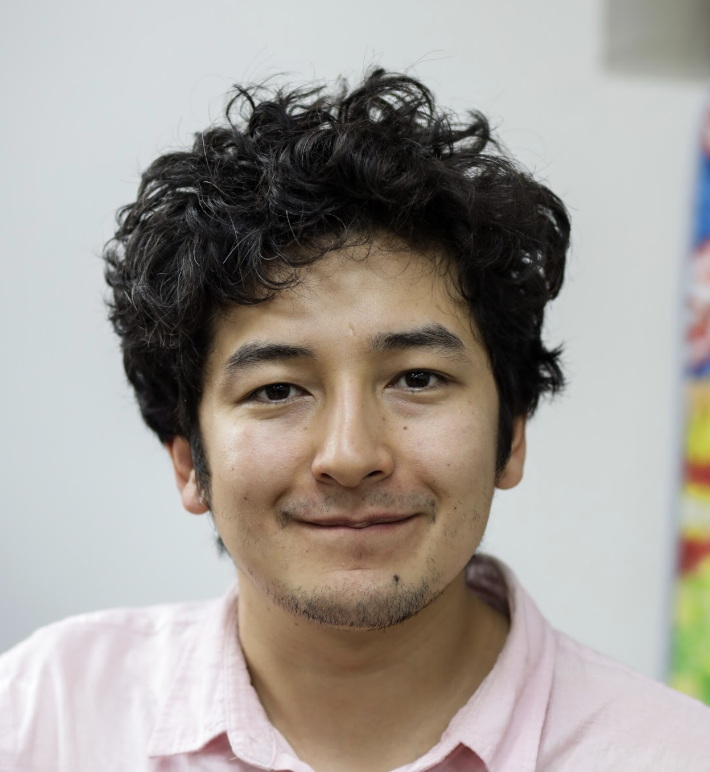
Maulen Akhmetov’s story does not begin with a diagnosis or a personal tragedy. It begins with a simple and persistent tug inside him, a desire to build something meaningful, something that lasted longer than a single charity event or a weekend of volunteering. He had grown up watching how easily good intentions dissolved once the moment passed. What he longed for was a way to help that did not disappear at sunset, a structure that healed quietly and steadily, like the slow work of sunlight on winter ice. By the time he was a university student, this internal compass had already pointed him toward volunteering projects. He spent time in special education classrooms during his exchange year in the United States, encountering for the first time the beauty and fragility of lives that required a different kind of attention. Later, in Almaty, he discovered a small association running a café that employed people with developmental disabilities. He went there first as a volunteer. Then he watched. Then he asked questions. Then, slowly, something took root: It is possible to build a place where inclusion is not charity, but structure, not occasional, but daily.
When he returned to Qazaqstan, he did not yet imagine running his own social enterprise. But purpose has a way of gathering around those who take small steps. By 2016, supported by research emerging from the World Bank and the OECD about mental health as “the most neglected development priority,” he began sketching an idea: a café where adults with mental, developmental, or learning disabilities could work, earn stable income, experience community, and step into adult life with dignity. He wanted it to function not as a symbolic gesture, but as the final step of rehabilitation, a bridge between psychiatric wards or childhood centers and the wider world. He named it simply, a social café. Today it is known as Künde, with one location in Astana and another three in Almaty. Künde literally means: “every day,” “daily,” “with constancy,” “habitually,” “as a daily rhythm.” It carries a sense of steadiness, continuity, everyday life, and the small routines that build a human being. In Qazaq culture, it also has an emotional nuance of: something that becomes part of one’s daily existence, not extraordinary, but natural; a daily practice that shapes character; and the ordinary acts through which community is built. For a social café that employs people with developmental or psychiatric disabilities, Künde is a beautiful, philosophical choice.
But in the beginning, Künde was just an idea, a rented space, and a sense of responsibility he could not quite explain. Opening a social enterprise sounds noble from the outside. But like much of Maulen’s journey, it was born as much from internal struggle as from external compassion. For years he had wrestled with depressive episodes, abrupt seasons where his mind slowed, energy drained, and work felt impossible. In a conventional job, with fixed hours and unyielding expectations, he would have been fired. “Entrepreneurship gave me freedom to survive myself,” he says quietly. It is one of those truths he drops into the conversation without ornament, the way someone mentions weather. It is this inner landscape, the valleys of depression, the fog of ADHD, the long work of therapy, that shaped the kind of employer he became. He understood instability not as weakness, but as reality. And so he built a workplace where instability was not punished. In Künde, if an employee with schizophrenia experiences seasonal decline in spring or autumn, the schedule shifts. If someone needs two weeks off, they keep their salary. If someone struggles with anxiety, the café psychologist steps in. Staff receive life-skills training: reading, numbers, English, how to wash dishes at home, how to set a table, how to help one’s mother. Each of these acts is small, almost invisible, yet together they create something extraordinary: a life of one’s own.
Maulen never imagined he would employ more than twenty-two people with disabilities across both cities, nor that he would witness two marriages, a divorce, and even a healthy child born to a couple where one parent lives with cerebral palsy and the other carries a lifelong diagnosis of mental retardation. He laughs softly when he speaks about it, not out of mockery, but out of awe at the ordinariness of it all. “They go to movies, to theatres,” he says. “They live normal lives.” Normal is a powerful word in a society still learning how to treat difference. Qazaqstan’s Soviet legacy has taught generations to hide what is “not presentable.” Adults with developmental disabilities were long expected to remain invisible, tucked away in psychiatric institutions, or at home, or behind the walls of silence. Childhood centers exist; adulthood, however, is a disappearing bridge. “Once a child grows up,” he explains, “there is nothing.” Künde Café was created precisely to fill that void. For many of their employees, it is the first place where they are not “patients,” “children,” or “invalids,” but coworkers. People with expectations, schedules, uniforms, salaries, and pride.
And for their mothers, mostly single mothers, the change is seismic. With their adult children earning income and gaining independence, these women can go back to work, complete documents, or simply breathe. “We break the poverty cycle,” Maulen says. “That’s a big impact of the project.” There is no pride in his voice, only observation, as if stating the mechanics of light.
Running a social enterprise is not romantic. It is precarious. Everything affects income: egg prices, rent increases, oil shocks, tax changes. While his peers enjoy the stability of corporate salaries, he lives inside volatility. “Every month is different,” he admits, “and no one tells you what to do.” Harder still were the betrayals. One business partner stole the money he had raised just before opening the first café. Another fell into paranoia, stopped working, siphoned funds, and later died in a tragic car accident, after which her mother sued the company. A third partner turned out to be stealing as well. These are the human blows that nearly dismantle a person’s spirit. “I thought people would never steal from a project like this,” he reflects. “But people have their own families. Their own survival.”
He learned, painfully and slowly, to trust with vigilance, to lead with boundaries, and to work with a calm realism that Abai would recognize as the wisdom that sees the world without illusions. Yet even after all of this, he stayed. When asked why, his answer is simple: “A good review from a customer. A happy employee. A sense that something is working.” For some, fulfillment is dramatic. For him, it is quiet. A typical day for Maulen does not resemble the productivity myths of modern entrepreneurship. He exercises daily, a discipline that keeps his mind from slipping into long shadows. He swims competitively. He journals. He sees his therapist. He talks to mentors, some of them older entrepreneurs who share advice with generosity. These routines form a rhythm that supports his emotional equilibrium, his journey toward what Abai calls the integration of heart, mind, and will.
He carries no illusions about worklife balance. He has friends, sports, and evenings, but no wife or children yet. There is acceptance in his voice, not regret, as if he is still learning who he is becoming. “I’ve never worked in corporate,” he says. “Entrepreneurship is all I know. It gives me purpose. I don’t know who I would be without it.” This is not the self-glorifying language of a founder. It is the confession of someone who knows that surviving one’s inner world is already a kind of work. His employees’ well-being is folded into the structure of the café. A psychologist works regularly with them. Daily meetings allow tensions, gossip, misunderstandings, hurt feelings, to be addressed gently. Parents give each other advice: how to obtain subsidies, navigate government programs, or secure state-provided apartments. Eight employees now live in stable housing because of coordinated efforts at Künde.
In Almaty, one of the café is experimenting with a new model: partnering with existing cafés who want to adopt Künde’s methodology. They pay a small royalty, receive training, and hire people with Down syndrome or other developmental disabilities. It is social franchising not as expansion, but as ecosystem-building. Maulen’s dream is not to own dozens of cafés. It is to create a model others can copy, in Qazaqstan, and beyond. “I want something that spreads,” he says. “Something sustainable.” When asked what systemic changes Qazaqstan needs, he speaks less about government grants and more about legal reform, specifically, the restrictive status that denies adults with mental disabilities the right to sign their own documents. This guardianship system, he explains, protects parents but immobilizes individuals. “It takes away legal adulthood,” he says. His café is one of the few places where adults are treated as adults.
Cultural change is slower. “Our culture stigmatizes and hides [disability],” he states plainly. “We have a long way to go.” But he also sees progress, in younger generations, in families who refuse shame, in cafés where employees with disabilities serve customers who smile back. Not all reactions are positive. Some customers avoid the café. Others mutter prejudices. He ignores them gently. “We just try to give good service,” he says. “That’s the only answer.” Success, for him, is not a feeling. It is stability. The ability to support a future family. To sustain the project. To avoid burning out. “Financial stability is important,” he admits. “If you don’t have it, everything else ends.” Yet he also speaks of another success: the balance between giving everything and losing oneself. “If you are healthy,” he says, “that is also success.” He is asked what advice he would give to people with disabilities who want to become entrepreneurs. He hesitates. Something in him resists giving simplistic encouragement. Life is more fragile than slogans. “If you have a family that can support you, then yes, try,” he says carefully. “But without support… it’s difficult.”
The honesty is not discouragement; it is responsibility. Looking back, he would change one thing: choosing business partners more carefully. “I was naïve,” he admits. “I assumed that people would protect a project like ours.” His voice trails, half-tender, half-tired. This is perhaps the deepest lesson he carries: good intentions are not protection, and kindness alone cannot hold up a business. And yet, despite everything, he remains an optimist.
“To start something like this, you have to be optimistic. It’s a crazy idea, to employ people whom society fears in a café, where the public comes every day. But optimism has to be balanced with realism.”
In this balance, between hope and pragmatism, between dreaming and accounting, between compassion and caution, lies the essence of the Tolyq Adam: the unity of mind, heart and will. Maulen does not quote Abai. He lives him. He builds a place where people once hidden can pour coffee, clean tables, laugh with coworkers, fall in love, get married, get divorced, have children, buy apartments, and swim slowly, bravely, across the vast waters between isolation and belonging. A place where humanity breathes freely, and where work becomes a form of healing. A place where no one is hidden. A place where everyone belongs.