
Leadership Program for Teenagers “Tolyk Adam - Mind. Heart. Will.”
Venue:
Nazarbayev University, Block C3, 3rd Floor, Room 2016, Astana
Participants:
More than 40 teenagers in age 12–16
Date:
07.08.2026
About the Event:
The program represented a new direction in the Center’s research activities. While previous projects focused on the application of Abai’s philosophy to the development of entrepreneurs and business leaders, this initiative explored, for the first time, how Abai’s ideas can contribute to the development of leadership qualities and modern competencies among teenagers.
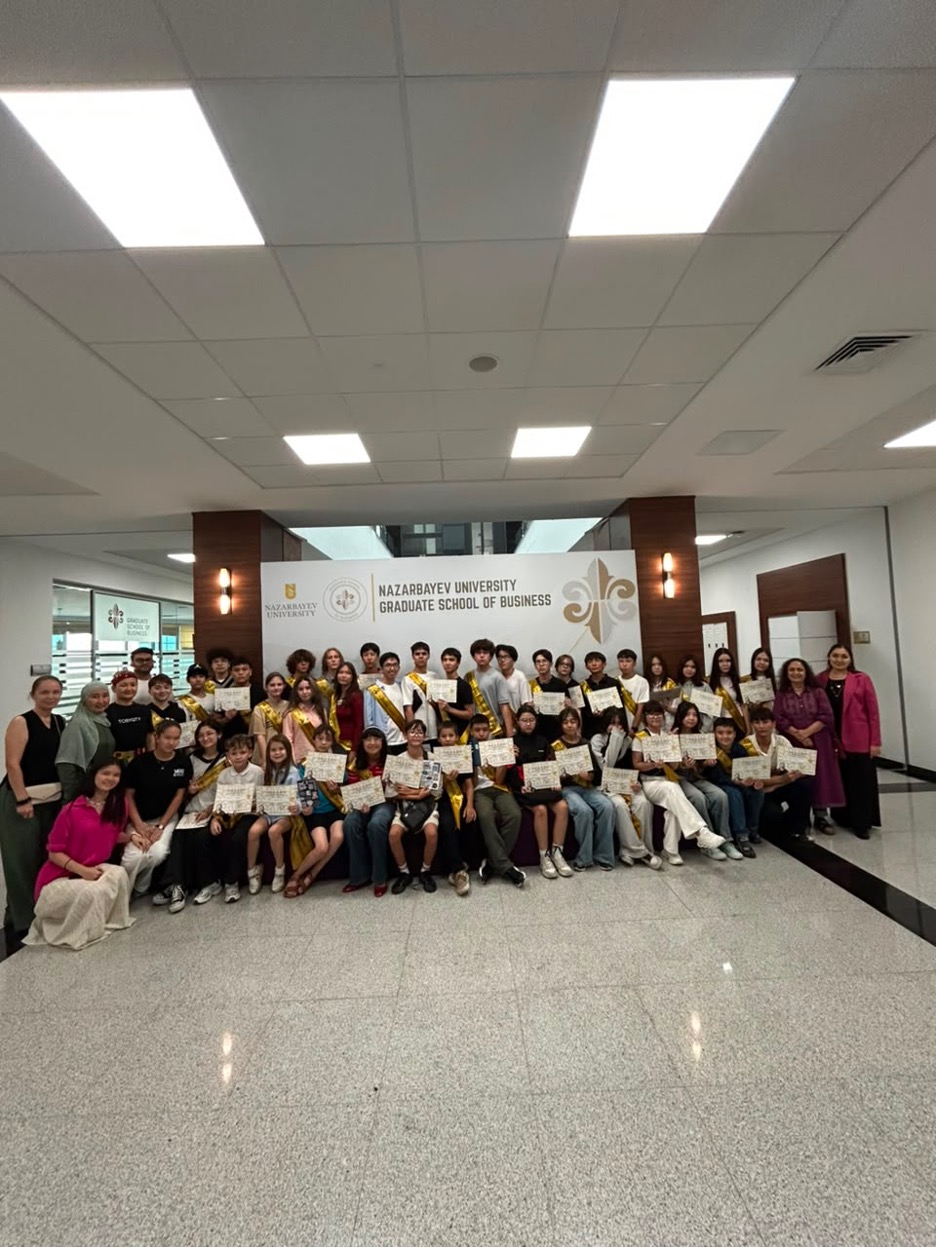
The program brought together more than 40 teenagers aged 12–16 from different regions of Kazakhstan, including children from large families. At its core was Abai’s concept of “Tolyk Adam,” which unites Mind, Heart, and Will.
Philosophical ideas were adapted for teenagers through team games, discussions, creative assignments, practical activities, and real-life scenarios. Particular attention was given to independent thinking, intrinsic motivation, responsibility for one’s decisions, teamwork, and understanding one’s future.
Participants also explored ESG principles, discussed the impact of artificial intelligence on the future of professions, considered career choices, and examined the role of individuals in a rapidly changing world.
The program brought together experts from different fields, including business trainers, researchers, career guidance specialists, AI and IT professionals, art therapists, neurocoaches, and public speaking experts. Participants also visited the Nazarbayev University campus and became acquainted with its educational and research environment.
An important part of the program was direct engagement with Abai’s philosophical heritage. Each participant received a modern graphic edition, “Abai. Words of Edification. A Prose Poem in Graphic Form,” by Gauhar Yusumbayeva, allowing teenagers to continue exploring Abai’s ideas after the program.
Key Results:
• Implementation of the first leadership program in Kazakhstan for teenagers based on Abai’s philosophy;
• Development of teamwork, communication, critical thinking, and responsible decision-making skills;
• Greater awareness of intrinsic motivation, personal responsibility, and future career choices;
• Introduction to ESG principles and contemporary challenges related to technology and artificial intelligence;
• Creation of a space for teenagers from different regions to communicate and exchange experiences;
• Introduction to the educational and research environment of Nazarbayev University;
• Continued engagement with Abai’s philosophy through a modern graphic edition of Words of Edification;
• Creation of a foundation for further research into the influence of Abai’s philosophy on leadership development and the human capital of the younger generation.
Feedback of Participants:
Eskendir Shiryaev, Semey:
“Many thanks to the organizers of the program. It had a great impact on me. I met some amazing people, and the time passed so quickly. Special thanks to Professor Shumaila Yousafzai. We were given the opportunity to look at Abai’s philosophy through a modern perspective and understand his ideas in a new way.”
For parents, the program also provided an opportunity to see how their children developed and opened up during the week.
Lyutsiya Kosalieva, Shymkent:
“Thank you so much for the opportunity to gain invaluable knowledge. Even from the short videos and fragments we received in the participants’ chat, it was clear how much useful information the children were receiving. I am very happy that I brought my son - every morning he got up eagerly and looked forward to the classes. Many thanks to all the organizers, teachers, and trainers for their work and contribution to the younger generation.”
Marina Derkach, Aktobe, had previously participated in the Master Training for entrepreneurs organized by the project team. After learning about the youth program, she decided to bring her sons to Astana:
“When I found out that you were organizing a program for teenagers, I was very happy about the opportunity and brought my sons to this wonderful university. Thank you for the knowledge and energy. This program not only meets international standards - it is about ethics, environmental awareness, and positivity. These are the things that are important for our children.”
Photos of the Event: